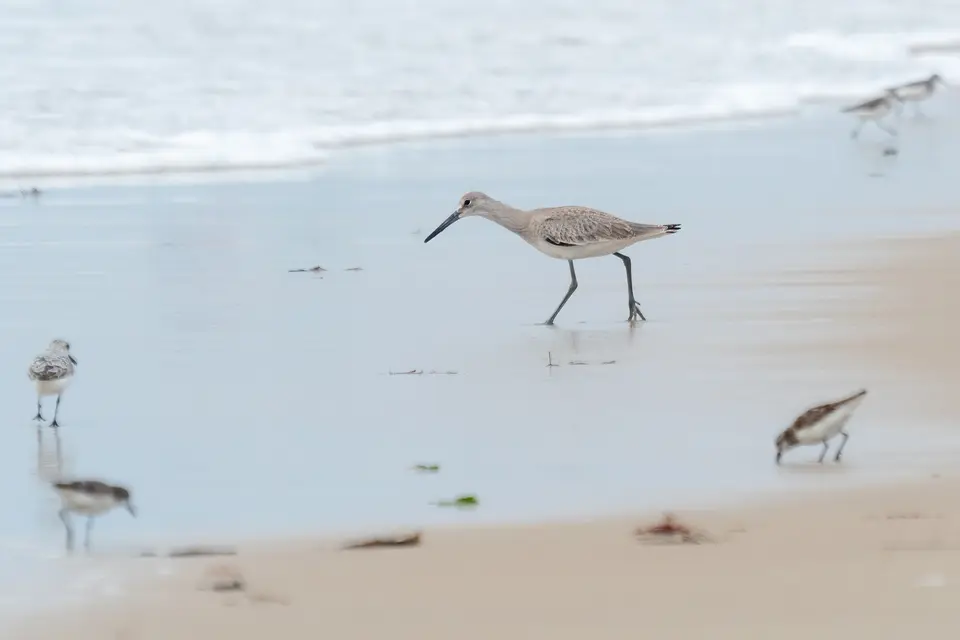
The roped-off areas on Hamptons beaches in spring and summer protect piping plovers, small sand-colored shorebirds listed as endangered in New York and threatened under federal law. They breed on Long Island's sandy beaches from Queens to the Hamptons, nesting in shallow scrapes on open sand above the high-tide line.
That puts them exactly where people want to walk and where dogs want to run. The Town of Southampton bars dogs within 50 feet of areas posted for piping plovers and other endangered species, and the dog rules guide explains the seasons.
The season
Plovers arrive from early to mid-March. Eggs are laid in May and June, an average of four, and incubation takes 25 to 31 days. Chicks leave the nest soon after hatching and fledge in 28 to 35 days. By early September all but a few stragglers have left.
What to do
- Stay out of posted and roped areas, and give any bird running ahead of you extra room.
- Keep dogs 50 feet from posted areas and out of the dunes. The Town of East Hampton also requires keeping dogs out of protected nesting areas.
- Beach fires cannot be started within 200 feet of a posted water-bird nesting colony under the Village of East Hampton’s rules.
- On Shelter Island, parts of Shell Beach serve as nesting habitat for plovers and other birds.
Where to walk instead
The beach walks guide and the quiet beaches guide list long stretches where you can give nesting birds room.
Why it matters
The birds feed on marine worms, insect larvae, beetles and crustaceans in the tidal wrack, so the line of seaweed at the high-tide mark is habitat, not litter.
Questions
Why are parts of Hamptons beaches roped off?
To protect nesting piping plovers, which New York lists as endangered. Plovers nest on open sand above the high-tide line from spring to early September.
How far should my dog stay from nesting birds?
At least 50 feet from areas posted for piping plovers and other endangered species, under the Town of Southampton's rule.